Title IX Enacted
Title IX of the Education Amendments of 1972 is signed into law, prohibiting sex-based discrimination in any education program or activity receiving federal financial assistance.
Title IX is a federal civil rights law that protects students from sex discrimination in schools and guarantees the right to an education free from harassment, assault, and inequity. Every student deserves to know these protections exist.
So, what does it do?
Title IX of the Education Amendments of 1972 is signed into law, prohibiting sex-based discrimination in any education program or activity receiving federal financial assistance.
A group of students filed a lawsuit against Yale University, arguing that the university’s failure to address sexual harassment constituted a violation of Title IX. This was the first case to use Title IX to argue that sexual harassment is a form of sex discrimination.
This landmark decision marked the first successful interpretation of Title IX to cover sexual harassment, significantly strengthening the law’s enforcement and protections against gender-based discrimination in educational settings.
The Obama administration’s Office for Civil Rights issues the “Dear Colleague” Letter, clarifying that sexual violence is a form of sexual harassment prohibited by Title IX and outlining schools’ responsibility to respond promptly and equitably to reports of sexual violence.
The 2011 guidance is rescinded by the Trump/DeVos administration, and interim guidance is provided, allowing schools more flexibility in handling sexual violence cases and decreasing protections for survivors.
In May 2020, new Title IX regulations are published. These regulations require schools to follow specific procedures for investigating and adjudicating sexual harassment and assault cases, including live hearings and cross-examinations. These rules make it harder for survivors to get the support they need.
After over a year of pressure from organizers, the Biden administration proposes new changes to the Title IX regulations on June 23, 2022 (the 50th anniversary of Title IX) to better protect students and ensure fair processes. These changes aimed to address some of the criticisms of the 2020 rules.
New Title IX rules are finalized and released on April 19, 2024, and take effect August 1, 2024. These rules provided enhanced protections for students and survivors, including LGBTQ+ students and pregnant and postpartum students.
A federal district court issues a decisive ruling that vacates the 2024 Final Rule in its entirety. The Department of Education has confirmed that the 2024 Title IX regulations and related resources are not effective in any jurisdiction — meaning the 2020 regulations are the rules schools must follow today.
The U.S. Department of Education moves civil rights enforcement from OCR to the Department of Justice, shifting how harassment and discrimination complaints in K-12 schools and colleges are investigated and resolved — and making it even more confusing for students and families to understand where and how to seek justice.
The future of Title IX and its enforcement at the federal level remains uncertain — and yet students still have the legal right to be protected in their schools!
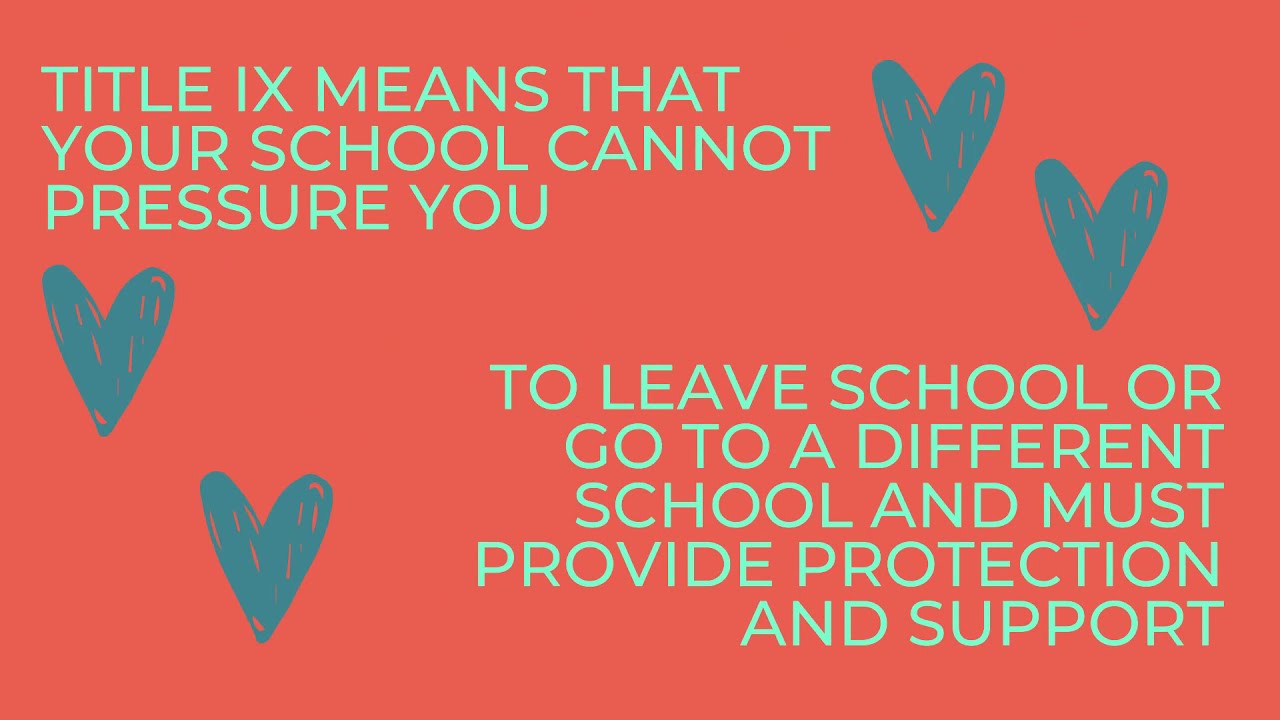
That means your school is legally required to prevent and respond to sex-based discrimination — including sexual harassment and assault — so every student has equal access to education.
Private schools that receive no federal funding aren’t bound by Title IX. But your school may still have its own anti-discrimination and safety policies — check your student handbook or ask an administrator about your rights and protections.
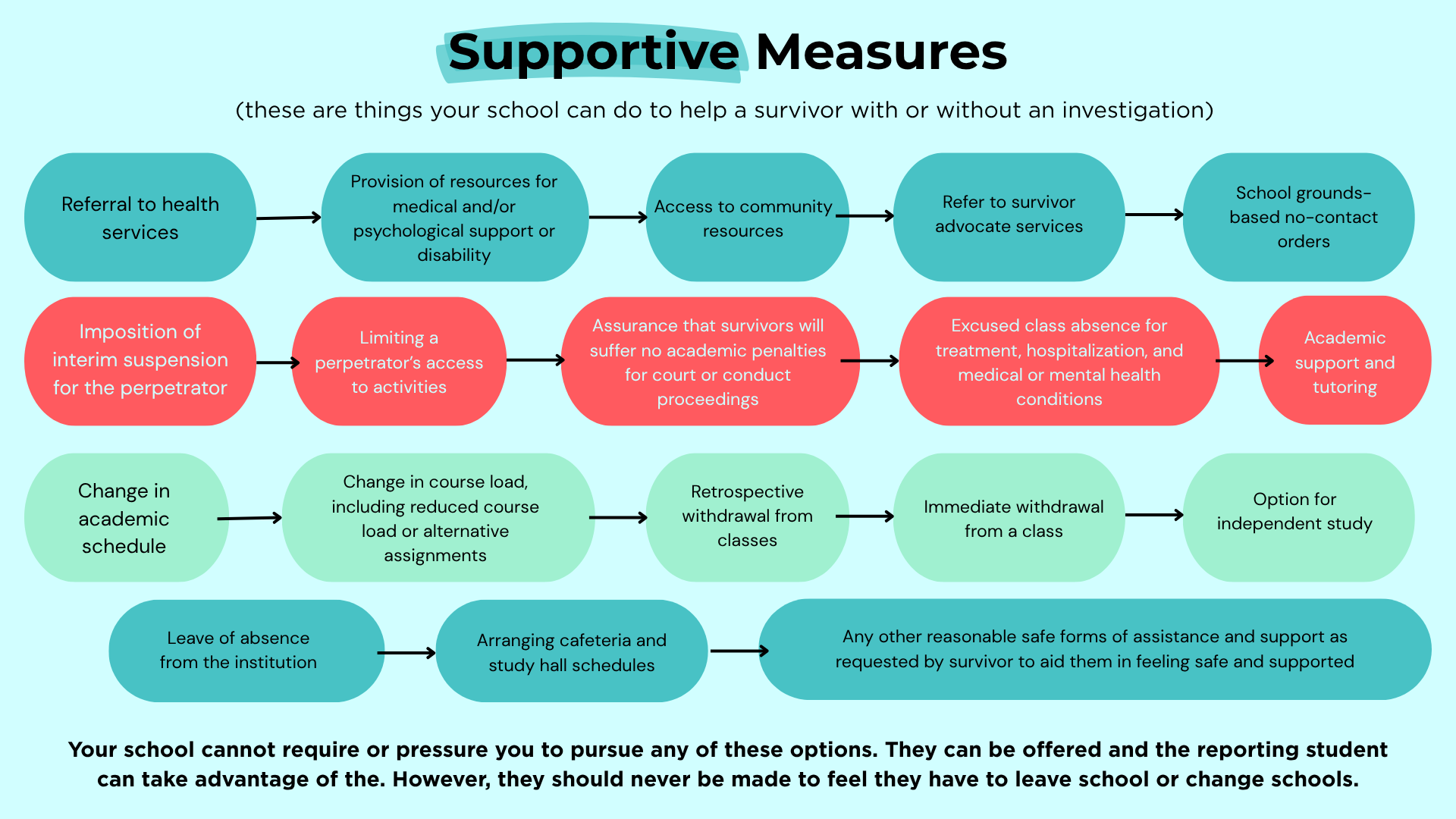
Schools are required to offer supportive measures to students impacted by any form of sex discrimination, including sexual harassment and sexual assault. Students and families can request supportive measures even if they choose to not have an investigation.
Explore SafeBAE’s latest blog posts and social media explainers on Title IX, school accountability, and student rights.
Since 2020, schools have been pulled back and forth between restrictive rules, attempts at expanded protections, and ongoing court challenges. This leaves survivors with fewer options, and schools without clear or consistent guidance. That’s why knowing about Title IX is important, but not enough on its own. Your school has the power to do better.
We created the School Policy Reform Guide to help students, educators, and administrators strengthen policies beyond the bare federal minimum. By adopting trauma-informed, survivor-centered practices, schools can ensure real safety, transparency, and accountability.